3850 Grand View Blvd. - Los Angeles, CA 90066 - Phone:(310) 391-6741 - Fax:(310) 391-6744 - Email: MarVistaAMC@gmail.com
3850 Grand View Blvd. - Los Angeles, CA 90066 - Phone:(310) 391-6741 - Fax:(310) 391-6744 - Email: MarVistaAMC@gmail.com
(310)391-6741
www.marvistavet.com
|
FEMORAL HEAD AND NECK OSTECTOMY
Hip joint after femoral head has been removed. (original graphic by marvistavet.com)
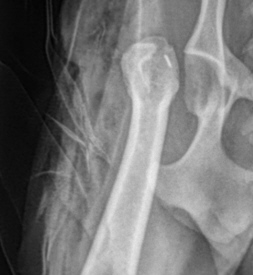
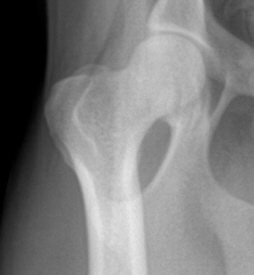
The femoral head osteotomy is the hip surgery where the head and neck of the femur (thigh bone) are cut off and permanently removed. There are many reasons why a pet might benefit from removal of the femoral head and neck. Some typical reasons include:
Ultimately, the goal of the FHO surgery is to create a false hip joint which will be more comfortable and yield better mobility than the diseased joint the patient had before. Since results are generally so good with surgery, provided the patient is relatively small and/or relatively active, often simply removing the femoral head is the least invasive, least costly, and fasted route to a pain-free mobile hip.
THE NORMAL HIP JOINT
THE OPTIMAL PATIENT
SURGERY As mentioned, surgery involves removal of the femoral head under general anesthesia. Your pet will be in the hospital overnight on pain management medication and will go home when he or she has a good appetite and is mobile on three legs. It will take time before the pet is willing to bear weight on the leg so he/she will be walking on three legs at first. There may or may not be stitches present externally. Recovery can be expected to take approximately six weeks.
THE FIRST TWO WEEKS AFTER SURGERY During this period, the tissues are healing from having been cut and manipulated during surgery. The focus is on pain management and rest. After the second day, warm (not lukewarm but very warm) compresses for 10-20 minutes are helpful to improve circulation to the area. This should be done 2-6 times daily. The pet should be confined indoors to one room during this period with no running or jumping onto furniture. Dogs should be walked on a leash outside to go to the bathroom and right back in with no further walks outside. At the end of the first week, the foot should be touching down.
AFTER THE FIRST TWO WEEKS At this stage, the post-operative pain has largely resolved and the goal is muscle strengthening and prevention of disuse atrophy. Basically, the more exercise, the better. In addition to normal play and walks some additional activities are helpful: walking through water (better than swimming), walking (especially up stairs or uphill), and “dancing” (holding the pet up by his front legs and walking him on his hind legs). If the false joint forms too tightly, the pet will not regain normal range of motion so exercise is very important during this time. Healing is generally complete after six weeks. The recovery time may be prolonged if activity is limited by arthritis in any of the other legs, by the size/weight of the patient, or if there is scarring or atrophy of muscles from the initial condition that necessitated the FHO in the first place. More formal rehabilitation programs (by a qualified animal physical therapist) can be designed for patients with these situations or who are behind schedule on their recovery for unknown reasons. If you have questions or concerns about your pet’s recovery, let your veterinarian know at once so that your pet can get back on track for normal mobility.
Page posted: 7/18/2014 |
|
HOURS
|
MAR VISTA ANIMAL MEDICAL CENTER
3850 Grand View Blvd.
|
 Processing ....